


Understanding Your Baby’s Head Shape
Many babies develop soft spots and shifting head shapes during the first year of life. Because a baby’s skull is naturally soft and growing rapidly, pressure on one area can lead to flattening or asymmetry. This is often called plagiocephaly (flattening on one side), brachycephaly (flattening across the back), or less commonly scaphocephaly (long, narrow head shape).
Why Head Shape Matters
Head shape differences are more than cosmetic — they can reflect how your child is developing and how they tolerate pressure during early growth. When flattening happens early and isn’t monitored, it may become more noticeable or harder to correct later. Consistent tracking of head shape gives families and clinicians objective insight into whether a head shape is within typical limits or showing asymmetry that needs evaluation.


What Causes Flat or Asymmetric Head Shapes?
Babies spend a lot of time on their backs — which is important for safe sleep — but this can also increase pressure on the back or sides of the skull. Additional contributors include:
- Preferred head positioning — favoring one side when resting or during sleep
- Muscle tightness in the neck (torticollis)
- Limited tummy time or limited varied positioning while awake
- Prematurity or reduced movement
These factors can make flattening or asymmetry more likely if a baby’s head rests in the same position over time.
How You Can Monitor and Track Head Shape
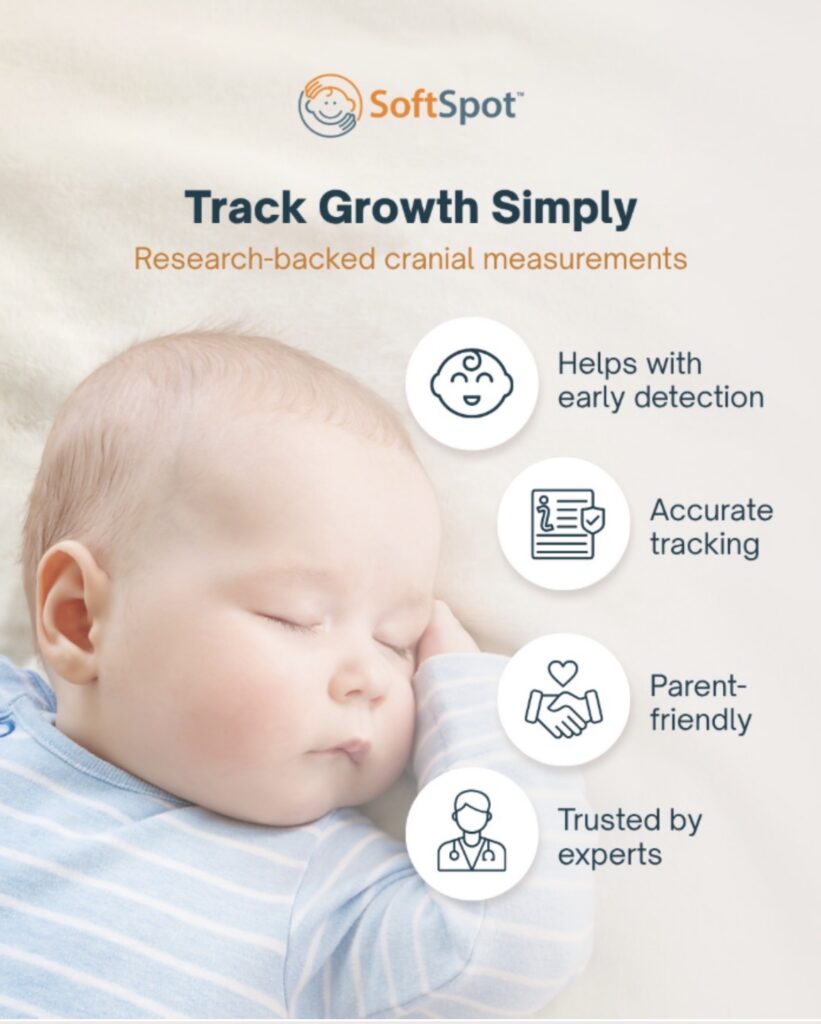
Skills on the Hill has partners with SoftSpot, a tool parents and professionals use to measure infant head shape using photos taken with a smartphone. The app analyzes cranial dimensions (like width, length, and diagonals) to provide objective, repeatable measurements over time. This helps families track trends rather than rely solely on visual impressions, so decisions about care can be more informed. You can search for a SoftSpot trained provider on their special SoftSpot Connect database.
Regular measurements — combined with clinical guidance — can help determine:
- Whether head shape differences are mild and improving with repositioning and active play
- Whether professional evaluation or therapy is warranted
- Whether more specialized care (like cranial orthotic assessment) might be helpful

When to Consider an Evaluation
You might want to schedule an evaluation if you notice any of the following:
- Flattening on one side or at the back of your baby’s head
- Uneven ears or forehead asymmetry
- Your baby always turns their head to the same side
Even mild asymmetries are worth discussing with a pediatric provider or therapist trained in infant development and head shape assessment. Early evaluation helps guide whether repositioning strategies or more targeted support is the best next step.
How We Can Help
At Skills on the Hill in Washington, DC and Arlington, VA, our pediatric therapists are experienced in evaluating head shape differences and related developmental concerns. We provide a thorough assessment and work with families to design individualized strategies that support healthy growth and optimal motor outcomes — from repositioning and tummy time guidance to collaborative planning with your pediatrician.
Call today to schedule an appointment with one of our therapists and get answers for your child’s head shape development.
Choose The Next Step For Your Child’s Path Forward
In-Person Screening And Consults
Not Sure If Pediatric Therapy Is Right For You?
Experience How We Can Help with In-person Screenings and Consultations.
Schedule Your Screening!Online Developmental Checklist
Concerned About Your Child’s Development?
Complete our online Developmental Milestone Checklist to learn whether your child is on track or may need extra support.
Get Answers Now!