


Speech-Language Therapy: Helping Kids Manage a Spectrum of Conditions
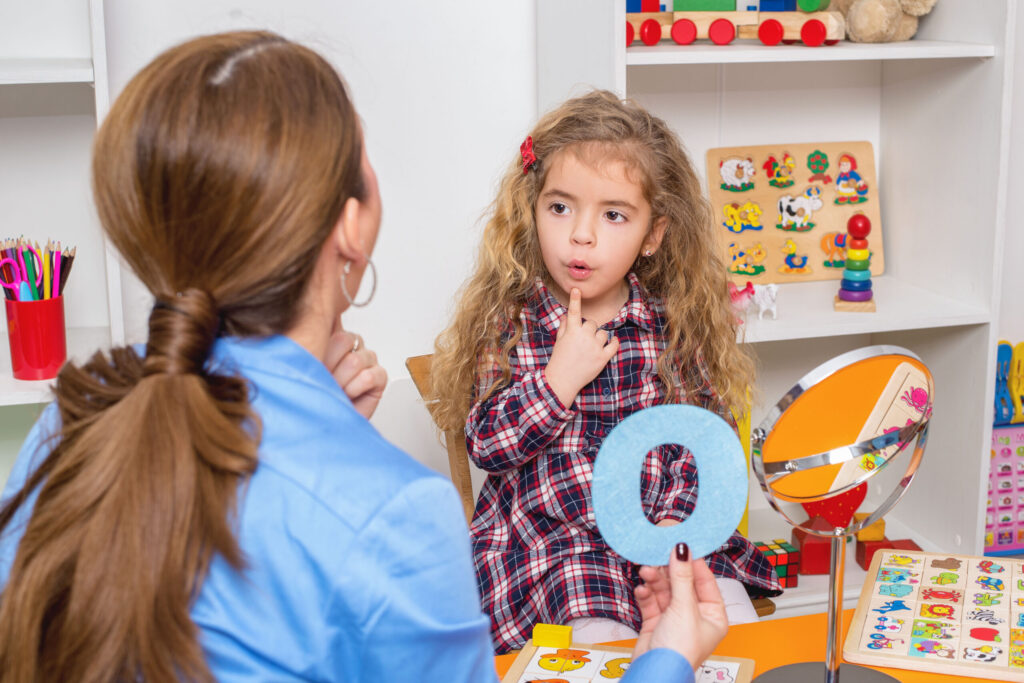
The pediatric therapy services at Skills on the Hill can help your child manage or resolve various conditions. We have an expansive team pulling from three different disciplines, including pediatric speech-language therapy.
But what exactly is speech-language therapy? Because it’s often shortened to “speech therapy,” many assume the field focuses on helping kids learn to speak correctly. While that is true, it’s not all that a speech-language therapist (sometimes called a speech-language pathologist) can do. In fact, here are a few examples of our recent patients:
- Austin, a six-year-old who struggled with stuttering
- Sophia, a ten-year-old who had difficulty expressing her thoughts in writing
- Noah, an eight-year-old whose autism made it difficult to connect with his peers
- Amelia, a seven-year-old whose cleft lip made speaking and swallowing a challenge
While these four kids might have different needs, our speech-language therapists were able to help all of them. Why? Because speech-language therapy isn’t just about speech.
Keep reading to learn more about how a speech-language therapist can help your child thrive–or call our Washington, DC, or Arlington, VA clinic to schedule an appointment today!
What Exactly Does a Speech-Language Therapist Do?
One reason speech therapy is now known as speech-language therapy is to provide more insight into the scope of the field. Here’s everything that a speech-language therapist can help address:
- Speech: We can help children who struggle to correctly produce sounds (such as stuttering) or have voice quality issues.
- Language: Language is an expansive concept. Some children struggle to understand others (receptive language), while others might struggle to express their thoughts, ideas, or feelings (expressive language). Language also encompasses four areas: reading, writing, speaking, and listening.
- Social Communication: This refers to our ability to communicate with others. Some children struggle in social situations; perhaps they don’t understand nonverbal cues or don’t intuitively understand the back-and-forth nature of conversations.
- Cognitive Communication: This refers to the thought processes that allow us to interact with others. Children with cognitive-communication disorders might have a hard time organizing their thoughts, understanding a joke, or remembering information.
- Swallowing Disorders: Finally, because the same muscles that allow us to speak also allow us to eat, we can help we can help children who struggle to chew and swallow.
What Happens During a Speech-Language Therapy Session?
We always begin with a comprehensive assessment to help us understand your child’s strengths and limitations. We’ll ask you to fill out an in-depth health history while we observe your child to get a feel for how they communicate. We try to do this in a way that feels as comfortable as possible–a conversation or playtime rather than a medical exam.
We also recognize that some conditions, such as autism, require a comprehensive care team. In those cases, we’ll work closely with your child’s physician, occupational therapist, and other healthcare providers to ensure our treatment fits your child’s overall care plan.
We then develop a customized treatment plan that meets your child’s unique needs. Every plan is different and will depend entirely on your child and their overall goals. Ultimately, however, we want to help your child thrive at school and playtime, giving them the skills they need to accomplish their dreams.
For some kids, this might mean working with them to improve the strength of the mouth muscles so they can speak more clearly. For others, it might mean teaching them strategies to navigate social situations more successfully and providing opportunities to practice those strategies.
We also recognize that not every child will communicate in the same way. Some children might benefit from augmentative and alternative communication (AAC) methods. These methods are alternatives to speaking and writing–such as using a picture board or speech-to-text devices.
Finally, we understand that your child’s therapy should extend beyond the walls of our clinic. For that reason, we’ll work closely with you to ensure your child can apply what they learn during therapy. We can suggest fun at-home exercises and provide guidelines for loved ones to communicate more effectively with your child. We can also help you advocate for your child at school.
Want More Personalized Guidance? Schedule An Appointment!
As speech-language therapists, there’s a lot that we can do. If you want to learn how we can help your child specifically, request an appointment with Skills on the Hill today. We can’t wait to meet you and your child and get started on a plan to help them soar!
Sources:
https://www.asha.org/students/speech-language-pathologists/
https://www.asha.org/practice-portal/professional-issues/augmentative-and-alternative-communication/