


Help Your Child Learn to Love Movement with Pediatric Physical Therapy
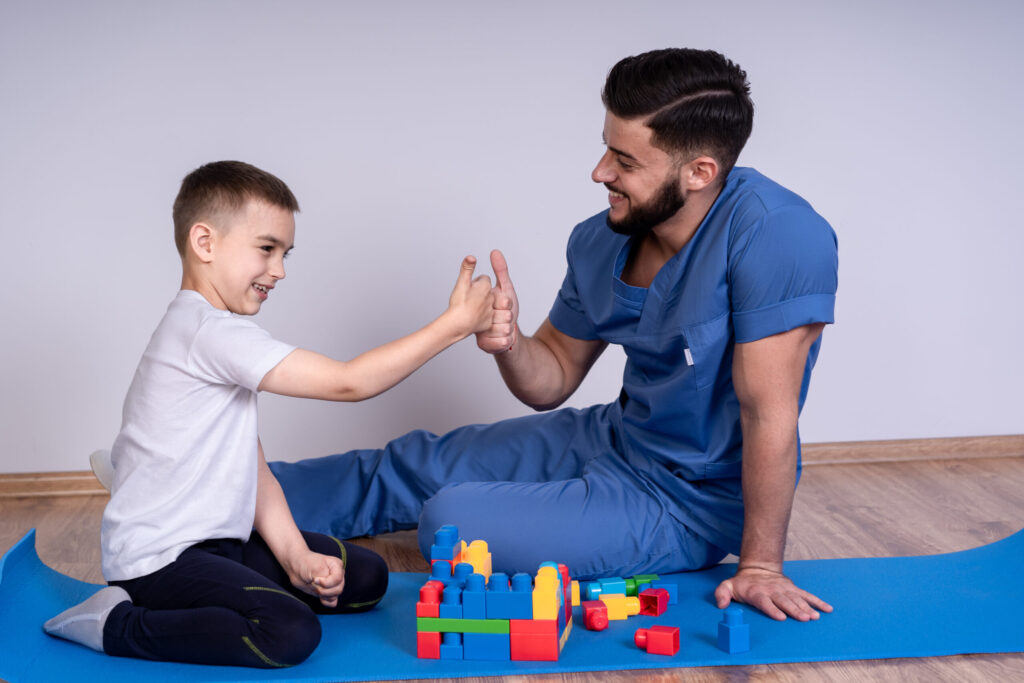
There’s no denying it: movement and exercise are crucial for healthy, happy kids. But what if your child has difficulties that make exercise a challenge? Maybe they’ve missed some key developmental milestones or been diagnosed with a neuromuscular disorder that causes issues with gait or balance. No matter the reason, pediatric physical therapy offers fun, effective solutions!
Most people’s conception of physical therapy comes from physical therapy for adults, which focuses on joint pain, post-surgical rehabilitation, or conditions children don’t experience (such as disc herniations). But ultimately, physical therapy is about improving your body’s movement and functionality–something that can benefit kids!
In fact, regular movement is vital in children’s physical, mental, and social development. Playtime is literally how kids learn about the world around them, and we mark children’s development by looking at several movement-related milestones, such as rolling over, cruising, or taking their first step.
When a child struggles with playtime or basic movements, it can indicate something is wrong. That’s where pediatric physical therapy at Skills on the Hill can step in: first, our experts can help identify the underlying cause of your child’s difficulties. Next, we’ll create a customized treatment plan to address that cause and get your child moving again.
And we do it all in a way that emphasizes the inherent joy of running, jumping, skipping, dancing–in short, moving.
Want to learn more about our approach to pediatric physical therapy? Schedule an appointment at our Washington, DC or Arlington, VA clinic today!
How To Know if Your Child Might Benefit from Pediatric Physical Therapy
Several childhood conditions can benefit from pediatric physical therapy, including the following:
- Cerebral palsy
- Down syndrome
- Spina bifida
- Scoliosis
- Torticollis
- Muscular dystrophy
- Autism
- And many more!
Sometimes, parents will begin physical therapy when their child receives a diagnosis for one of these conditions. However, it’s more likely that you’ll notice symptoms, developmental delays, or other difficulties before you reach that point–and a pediatric therapist can help you understand what’s going on with your child.
That’s why keeping track of developmental milestones is so important. Around 17% of children in the United States have some form of developmental delay, which can sometimes (although not always) indicate an underlying condition. The same is true for symptoms like hypotonia (low muscle tone).
If your child has missed any physical developmental milestones, schedule an appointment with our pediatric therapists. We’ll help you get to the bottom of things. Here are some significant milestones to watch out for:
- Two months: Holds up their head, moves both arms and legs
- Six months: Rolls over from tummy to back, supports themself on their arms when sitting
- Twelve months: Can walk while holding on to furniture
- Eighteen months: Walks unassisted, able to climb on and off a chair
- Two years: Runs, walks up stairs
In addition to watching out for specific milestones, pay attention to your child’s behavior. These are also signs that your child might benefit from PT:
- Frequently walks on their toes (or has an impaired gait for their age)
- Avoids recess or playtime
- Struggles to keep up with their peers while playing
- Has poor posture and/or limited mobility
What Can You And Your Child Expect During Pediatric Physical Therapy?
We’ll always begin with an in-depth physical assessment. As pediatric therapists, we understand that medical tests can be alarming for kids, which is why we work to make these assessments feel more like playtime than a doctor’s appointment.
We’ll observe your child as they spend time playing with various toys and equipment we have available, monitoring their movement patterns and looking for any potential impairments. Meanwhile, we’ll ask you to complete a comprehensive medical history, including information about your child’s developmental milestones.
From there, we’ll develop a customized treatment plan that addresses your child’s unique needs. Every program is different, but here are just some of the things we can help improve:
- Gross motor skills: These are the skills necessary for big movements, such as walking, crawling, or running. We’ll guide your child through fun activities to help them improve these skills so they can more easily enjoy physical activities.
- Muscle tone, strength, and endurance: We’ll show your child appropriate exercises to improve their muscular function–and provide you with activities you can do at home to continue that work!
- Balance and gait: If your child struggles with stability, we’ll have them participate in balance-related games and challenges so they can move about independently. We can also work with them to correct any impairments to their gait (walking pattern).
In addition to working with your child in our clinic, we can provide the tools you need to help your child succeed. We’ll share information about their condition, offer modifications for school and other activities, and suggest strategies to help continue their therapy at home.
Request an Appointment with Us Today
Pediatric physical therapy at Skills on the Hill offers several ways to help your child thrive! If you live in the Washington, DC or Arlington, VA area and are concerned your child isn’t meeting their movement-related milestones, make an appointment with us. We’ll get to the bottom of things so your child can go on to live a rich, active life!
Sources:
https://www.cdc.gov/ncbddd/actearly/milestones/index.html
https://www.choosept.com/guide/physical-therapy-guide-developmental-delay