



Finding Their Voice:
How Speech Therapy Helps Kids Communicate with Confidence
At Skills on the Hill Pediatric Therapy, there’s one thing we know to be true: Every child has something to say. However, getting those thoughts out into the world can be difficult or frustrating for some kids. Maybe they struggle with speech fluency, such as stuttering. Or maybe their language skills aren’t as strong as they could be.
Regardless of the reason, speech therapy gives children the tools they need to share ideas, express needs, and connect with others in meaningful ways. And over time, stronger communication often leads to stronger confidence.
Today, we want to share some of the most important ways speech therapy helps children communicate more clearly and comfortably, whether at home, at school, or with friends.
Seven Ways Speech Therapy Helps Kids Build Communication Skills That Matter
1. Improves Speech Clarity
Some kids have trouble with certain sounds, such as “r,” “s,” and “k.” Others may leave sounds out of words or mix them up. This can make it challenging for others to understand them.
Our speech therapists help improve speech clarity so kids feel more confident speaking up. We help kids:
- Learn how to move the lips, tongue, and jaw for each sound
- Practice sounds in words, sentences, and conversation
- Slow down speech when needed for better clarity
2. Builds Strong Language Skills
However, language isn’t just about pronunciation. It’s also necessary for kids to understand words and use them to share ideas.
That’s why speech therapy isn’t just about speech. Our team also helps with receptive language (what a child understands) and expressive language (what a child says). These skills are crucial for learning, social interaction, and classroom success, helping kids to:
- Follow directions
- Learn new vocabulary
- Put words together into clear sentences
- Share stories and explain ideas
3. Supports Social Communication
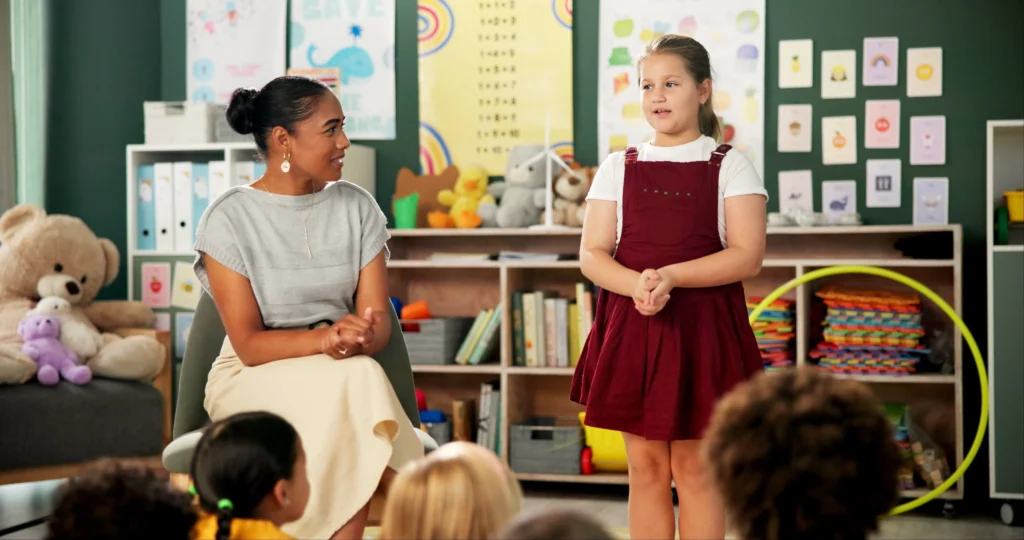
Some children struggle with the social side of communication, including skills such as taking turns in conversation, staying on topic, and reading body language. Improving these skills helps children feel more comfortable during playdates, group activities, and classroom discussions. We’ll work with kids to help them:
- Start and maintain conversations
- Understand facial expressions and tone of voice
- Use eye contact and gestures
- Adjust language based on the situation
4. Strengthens Oral Motor Skills
In some cases, communication challenges arise because a child finds it physically difficult to speak. We don’t often think about it, but speaking requires strength and coordination in the mouth. Better muscle control often leads to clearer speech and less effort while talking.
Our speech therapists will work on oral motor skills when children have trouble controlling the muscles used for speech. We can help them improve:
- Lip strength for sounds like “p” and “b”
- Tongue movement for clear pronunciation
- Jaw stability for longer conversations
5. Provides Training for Augmentative and Alternative Communication
Speaking isn’t the only way to communicate, and some kids benefit from alternative methods, such as picture systems, communication boards, or speech-generating devices. These systems are known as augmentative and alternative communication, or AAC, and they can play an important role in supporting speech development.
Our team will help kids:
- Discover the best AAC tools for their needs
- Learn how to use those tools effectively
- Utilize AAC tools across settings, including home and school
6. Improves Attention and Listening Skills
Effective communication also depends on focus and listening, especially in busy classrooms or group settings. Our speech therapists can help children improve skills such as:
- Paying attention to spoken language
- Remembering information
- Responding appropriately
7. Boosts Confidence and Self-Advocacy
One of the biggest benefits of speech therapy is confidence. The ability to communicate is an essential life skill, and as children learn to communicate more clearly, they often feel more comfortable expressing their needs, asking questions, and sharing ideas. This confidence carries over into school, friendships, and daily routines.
Schedule an Appointment to Learn More
Every child deserves to be heard. Speech therapy at Skills on the Hill Pediatric Therapy provides practical, evidence-based strategies that help children communicate more effectively and feel more confident doing it. If you have concerns about your child’s speech, language, or communication skills, early support can make a meaningful difference. Reach out to Skills on the Hill Pediatric Therapy today to schedule an evaluation or learn more about our speech therapy services. We’re here to help your child find the voice!
The Connection Between Movement and Learning
When most of us think of movement, we imagine playtime – running, climbing, dancing, or jumping rope. But movement is much more than a way for kids to burn off energy. Developing strong gross motor skills – big, whole-body movements that use larger muscles – actually lays the foundation for learning in the classroom, too.
When children strengthen their core, coordination, and balance, they’re also building the physical control needed to sit upright at a desk, focus on a lesson, or track words across a page while reading. These skills support brain and body communication, which helps with posture, attention, and even emotional regulation. Movement stimulates the sensory systems that help children organize their thoughts and respond calmly to their environment.
Research shows that regular movement breaks and physical play can boost attention spans and improve academic performance. Activities like crawling, tossing a ball, yoga poses, or even climbing at the park help children activate their sensory and motor systems, paving the way for better concentration, handwriting, and reading fluency.
Movement doesn’t just build strong muscles, it builds strong learners.
At Skills on the Hill, our therapists use purposeful movement in every session to promote not just physical development, but learning readiness. Supporting your child’s motor skills through play at home, like obstacle courses, dancing, or outdoor exploration, nurtures both body and mind.



Check Out our Storefront on Amazon!
At Skills on the Hill, we know that the right toys can make playtime both fun and developmentally meaningful for kids. That’s why we curated a special Amazon storefront full of therapist-recommended toys designed to support skills like fine motor development, cooperative play, language building, and more.
Featured Toy: Learning Resources Sorting Surprise Picnic Baskets

This cheerful picnic-themed activity set is a joy for preschoolers and toddlers alike. Little learners can uncover colorful food surprises hidden inside numbered picnic baskets, then sort and count them – making this playful set excellent for building color recognition, number skills, sorting strategies, and fine motor coordination.
Recipe of the Month: Lucky Rainbow Fruit Cups

Ingredients:
- 1 cup strawberries, sliced
- 1 cup mandarin oranges (or orange slices)
- 1 cup pineapple chunks
- 1 cup green grapes
- 1 cup blueberries
- Whipped cream or vanilla yogurt (optional, for “clouds”)
- Mini shamrock sprinkles (optional, for extra St. Patty’s fun!)
Instructions:
- Wash all the fruit thoroughly.
- In clear cups or small bowls, layer the fruit in rainbow order: strawberries (red), oranges (orange), pineapple (yellow), grapes (green), blueberries (blue/purple).
- Top with a dollop of whipped cream or vanilla yogurt to look like clouds.
- Sprinkle a few shamrock sprinkles on top if desired.
- Serve immediately or chill for up to 2 hours.
Recent Newsletters



You have more options than ever for empowering your child. Subscribe today for free healthy tips and exclusive offers twice a month!